Francesco De Giorgio Software engineer · Pisa, Italy
IT EN
Let's talk

Automation and AI for the work that repeats.

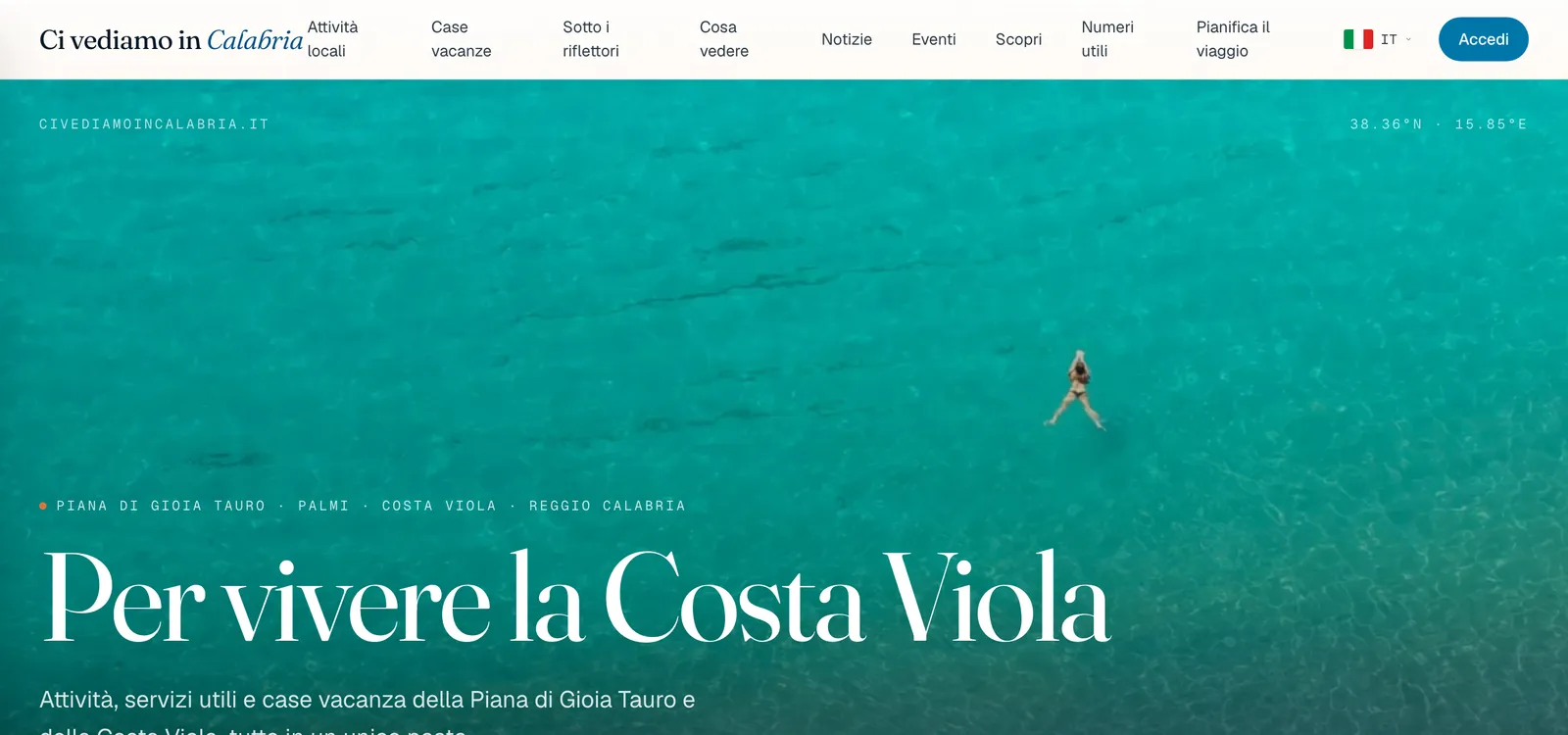
Automating does not mean bolting a chatbot into a corner of your site. It means taking what you redo identically every week, translating listings, retyping data, publishing pages, and handing it to the machine, with you checking before anything goes live. Ci vediamo in Calabria runs like that, in nine languages.

The problem

The work that comes back the same every week

Before a line of code gets written the question is always the same: which part of your work is identical to itself every time?

The Monday morning copy and paste

You take a price list or a calendar and retype it into the site by hand. Then again next month, the same way. This is where automation pays for itself fastest: the data exists, only the pipe that carries it is missing.
The site that speaks one language

You have foreign customers and an Italian site. Translating by hand never ends: every edit must be redone in every language. And translators bolted on top leave no page a search engine can read.

The pages you will never write

You know you need a hundred pages: one per product, per town, per service. By hand you never will, and meanwhile somebody else does. That is content you generate from a data source, then review.

What it covers

Four concrete things, not a promise

They are the same four that hold up the travel portal I built and keep updating on my own, one click away.

1

A site that translates itself

Content is written once and reaches every language you declared, with addresses, hreflang and sitemaps that stay consistent. On Ci vediamo in Calabria there are nine: Italian, English, German, Spanish, French, Hungarian, Polish, Dutch and Swedish.

2

AI content, checked by a person

The model prepares the draft, a person does the review, and without that step nothing goes live. It is a rule, not a good intention: publishing unread fills a site with mistakes that carry your name.

3

Pages at scale, not one by one

A single data source produces every page you need, each with its own address, title and structured data. That is programmatic SEO: the shape is designed once, the content changes per row.

4

Data that moves on its own

API integrations between the site and what you already use: back office, payments, calendar, email. A figure is entered once and shows up where it belongs, not retyped three times.

Data source AI draft Human review Publish Sitemap and IndexNow

Under the hood

What an automation that lasts is made of

Fragile automations give themselves away quickly: they work for a month, then somebody does one thing by hand "just this once", and six months later it is all manual again.

Languages are not a translation stuck on top

Each language gets its own address, its own page in complete HTML and its own place in the sitemap. Adding a tenth is a line of configuration, not a new project.

hreflang · multilingual sitemap · prerender

Review is a step you cannot skip

Between generating and publishing there is an intermediate state: the text exists but stays invisible until somebody approves it. That is where mangled names and invented facts get caught.

LLMs · APIs · human review

Publish and get found the same day

On every publish the sitemap regenerates itself and the search engines get a direct IndexNow notification, not whenever the crawler comes back.

IndexNow · Search Console

Honestly

When automating is a waste of money

I am writing this before you ask: if the volume of repetitive work is small, automating it costs more than it will ever save you.

If it is half an hour a month

Automating has a fixed cost: analysis, development, testing and maintenance, because something that runs by itself still needs watching. If the manual work it removes is small, that cost never comes back.

If the data does not exist yet

An automation needs a clean source. If the information lives in somebody's head, in a chat or across ten spreadsheets, the first job is putting it in order: sometimes that is enough.

If the writing is the product

A handful of pages, carefully written, valuable precisely because of how they are written: a machine draft saves five minutes and costs a full review. Better to just write them.

We do the sums before the quote: what it costs you today, what it costs to build, how long before it pays back. If it does not, I say so, and we may start from a website built properly.

Frequently asked

What people ask me about automation

Does the AI write my website copy for me?

It writes the draft, not the final version. The model prepares the text from your data, then a person reads it, corrects it and decides whether it goes out. Nothing goes online without that step.

Will Google penalise a site that is translated automatically?

The problem is not machine translation as such, it is publishing it unread and without telling search engines how the versions connect. With one address per language, consistent hreflang and a multilingual sitemap it works: that is the setup behind the nine languages of Ci vediamo in Calabria.

Do I have to rebuild my site from scratch to automate anything?

Not always. It depends on where your data lives and on what your current site can expose. I look at what you have, then tell you whether the automation can be grafted on or whether the foundation is worth redoing.

How do I know whether it pays off?

We count the hours. How many times a year you do that job, how long it takes, what it costs to build. If the sums do not add up I tell you. First reply within 24 hours, from a person.

07 · Contact

Is there a job
you redo
every week?

Tell me about it in your own words: what it is, how often you do it, how much time it takes. I will tell you whether it is worth automating within 24 hours, including when the answer is no.