Francesco De Giorgio Software engineer · Pisa, Italy
IT EN
Let's talk

iOS and Android apps people actually open.

I build apps that end up on your customers' phones and get opened again: bookings, orders, notifications and payments in their pocket. I design them, build them and publish them myself on both stores, and I stay when the operating system moves. But first I will tell you honestly whether you need one.

First things first

The question that always comes first

An app costs money and then lives for years. Before quoting one it is worth settling whether it is the right tool for your problem, because often it is not.

"I need an app" rarely means an app

Nine times out of ten there is another sentence underneath it: I want customers to book without ringing me, I want to stop writing orders on a scrap of paper. Sometimes the answer really is an app; sometimes it is a booking page built properly, which costs less and arrives sooner.
Who genuinely needs one

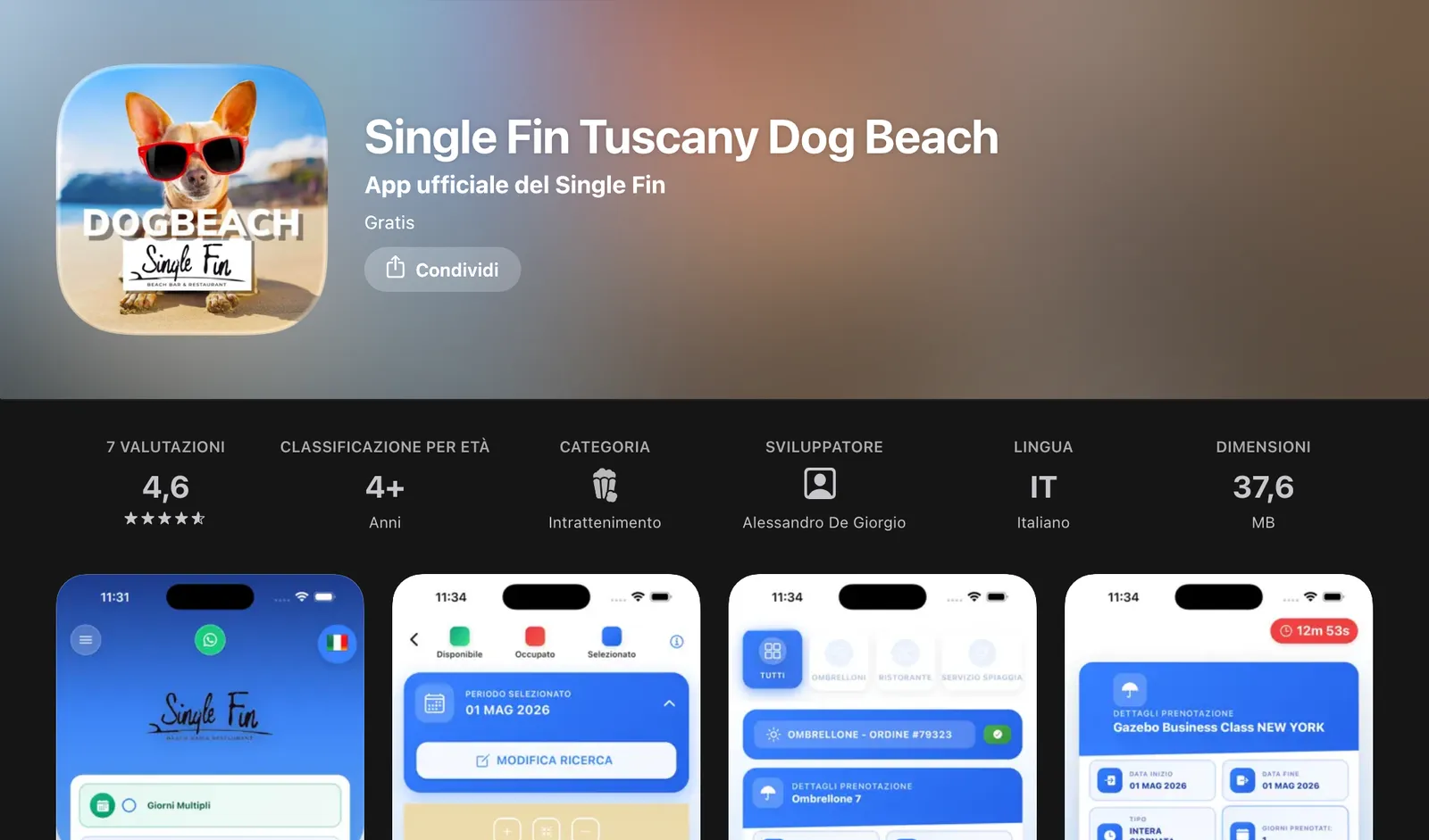
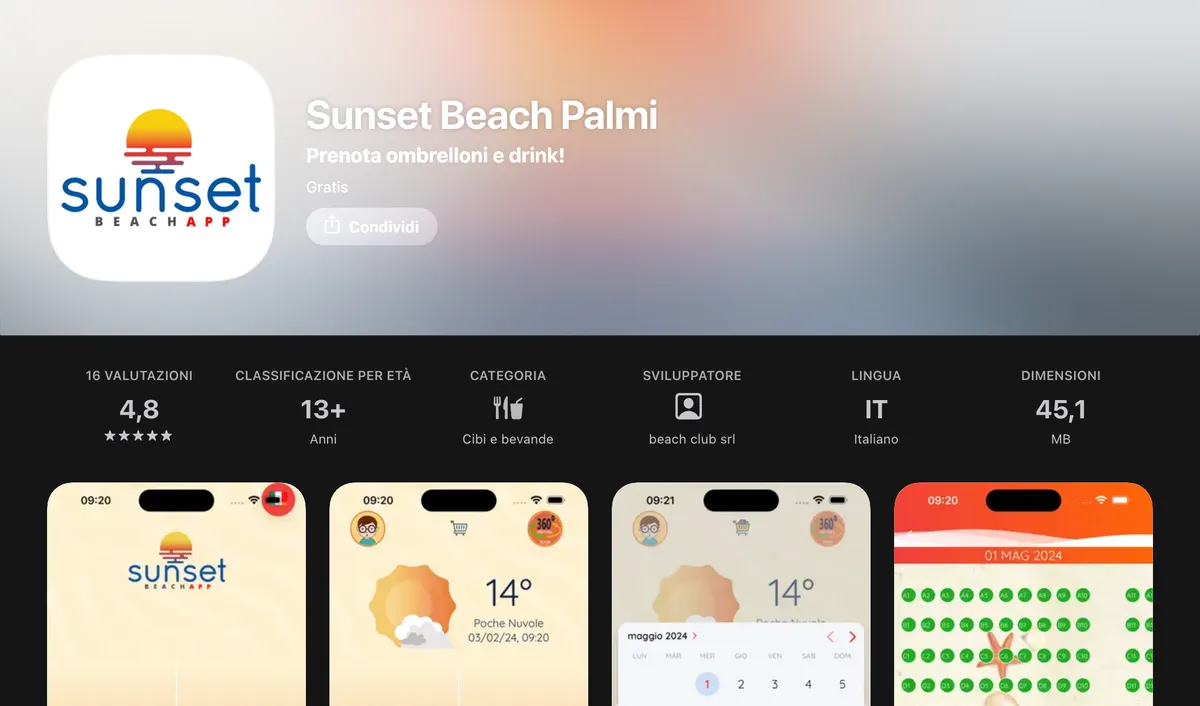
You need one when the same people come back and repeat the same action: booking a sunbed every Saturday, ordering without getting up from it. There the icon on the phone removes friction every time, and a notification arrives without buying attention. Beach clubs, gyms and venues are where an app pays for itself.

Who does not, and I say so

If your problem is reaching people who have never heard of you, an app will not fix it: on the store you are searched for by name, by people who already know it. Start with a website that gets you found and add the app afterwards.

What it covers

From the idea to the icon, with nobody handing over

An app is not finished when the code works: it is finished when it can be downloaded. And from there the long part begins.

1

Design and screens

Before a line gets written we put in writing what the app does and which two or three actions a person will genuinely perform. Out of that comes the proposal: what goes into the first version, what waits for the second.

2

One codebase, two stores

The app is built once and runs on iPhone and Android with the same screens and the same logic. You try it as it grows: I send you builds you can install on your own phone, so corrections land while they are cheap.

3

Publishing on the stores

The part that scares everyone, and the part I handle: Apple and Google developer accounts opened in your name, both store listings, icon, screenshots in every required size, the privacy and data declarations, and the back and forth with the reviewers until the app is live.

4

After it is published

iOS and Android change every year and the stores set deadlines to keep up: an app left alone breaks on its own. I keep it in line, fix what real use turns up, and republish on both stores.

Analysis Build On your own phone Store review Updates

Under the hood

Native, hybrid or PWA, in plain words

Three ways of building the same thing. What changes is the cost, the time and how much the app can ask of the phone, explained the way I explain it to people who do not write code.

Native

Written in each phone's own language: one version for iPhone, one for Android, two builds, two maintenance jobs. It earns its keep when the phone has to be squeezed: heavy graphics, sensors always on. For booking a sunbed it is like buying a lorry to do the weekly shop.

Two codebases · two maintenance jobs

Hybrid, what I pick almost every time

A single codebase that becomes a real app on both stores: same icon, same notifications, the same presence on App Store and Google Play. It costs less than two native apps, updates in one go, and for bookings, orders and payments it does the same job.

Angular · Ionic · Capacitor · React Native

PWA, the site that installs

A website built to behave like an app: one tap adds it to the home screen, it opens full screen with no browser bar, and it copes when the signal drops. It never touches the stores: no review, no waiting, what I fix this morning is on your customers' phones today. It suits you when the stores buy you nothing.

No store · instant updates

Notifications and payments

A push notification is the only channel that reaches a phone without buying attention, which is why it should be used sparingly: confirmations, reminders, the season opening, never leaflets. Payments go through Stripe and land in your own account: the same machinery as the booking platforms I build.

Push notifications · Stripe

Questions

What people ask me before we start

What does an app cost?

There is no price list, and anyone who hands you one is guessing. Three things move the number: how many actions the app has to handle, what it has to talk to (your back office, payments, a calendar) and how many people need to administer it. Plus two lines that only apps have: keeping both store accounts compliant, and going back into the code every time Apple or Google raise the bar. After the first call you get a written proposal.

Do I have to publish on the stores?

No. If what you need is bookings, orders and payments, a PWA does the same job: it installs from a link, it skips the review and it updates the moment I say so. The stores are worth it when being on App Store and Google Play is part of how you present yourself, or when you need phone features the browser will not hand over. A PWA can move to the stores later, same project.

How long between a finished app and a downloadable one?

The length of the review. Apple and Google check the final build before it goes live: they may ask for a change to the listing, an explanation of what data you collect, or a fix inside the app. I answer and resubmit until it passes. Which is why a submission never goes in the day before a seasonal opening.

What happens if the app is never updated?

It goes wrong slowly, then all at once. iOS and Android ship a new version every year and the stores set deadlines to keep up: an app left alone first breaks on some phones, then stops accepting updates, and eventually drops off the store. That is why maintenance sits in the proposal next to the development, not as an extra for later.

06 · Contact

Do you
really need
an app?

Tell me what happens at your counter or on your phone today, and what you would like to happen inside an app. You get an honest answer within 24 hours, including the one where the app can wait.